Networked Lighting Controls That Actually Get Commissioned.
Design and commissioning of networked lighting controls for NYC buildings. The layer that turns an LED retrofit into savings you can verify, document, and stand behind when a program or an inspector asks.
What Networked Lighting Controls Are
Networked lighting controls (NLC) add a control layer over a lighting system: luminaire- and zone-level occupancy sensing, daylight harvesting, scheduling, high-end trim, and energy monitoring, all on a networked backbone instead of standalone switches and sensors.
That backbone is what separates NLC from a basic LED swap. A retrofit changes the fixtures; controls change how and when they run, and give you a system you can monitor, re-tune, and report on.
Beyond energy, it gives you operational visibility: fixture-level fault detection, runtime tracking, and standardized (ANSI/NEMA C137.9) reporting that supports utility verification and future LL97 measurement and verification.
Why It Matters
Compliance
Controls are central to Local Law 88 compliance, and the kilowatt-hours they cut feed directly into Local Law 97 emissions. See how the laws connect.
Operating Savings
Average added savings when networked controls go on an LED system; where you land depends on the building and the commissioning.
Incentives
New York retired statewide lighting rebates at the end of 2025. What's left centers on controls — DLC-qualified, properly commissioned systems. See what's still funded in 2026.
Making the case to a board or a partner? Take the one-page summary with you.
Download the PDFHow the Service Works
Design specifies what the system should do; commissioning proves it does. It draws on the same field data as a Project+ survey.
Feasibility Memo
- What's installed today: fixtures & controls
- Candidate scope and platform fit
- Expected savings range
- Programs that could pay for part of it
Design & Spec
- Platform selection + bill of materials
- Zonal sensor & node layout on your drawings
- Control sequence of operations
- C137.9 configuration-reporting plan
- Bid-ready specification package
Commissioning
Node and sensor setup, schedule configuration, sequence verification, and the final C137.9 report.
Everything in Basic, plus occupancy-pattern tuning, high-end trim, daylight-harvesting calibration, and post-install savings verification.
If your retrofit went in four or more years ago and the controls were never commissioned, or never installed, the operational savings are still on the table. A feasibility memo tells you what's recoverable — the usual symptoms and causes.
What gets installed
A wireless controller on every fixture, sensors and wall stations in each space, one gateway per building.
What networked lighting does
Three ways to light the same corridor
Basic sensors hold full output long after you leave; a networked zone settles back to standby in about a minute.
Where controls pay off first
The spaces that run closest to twenty-four hours a day are the ones where a sensor changes the bill fastest. Pick a space and drag the divider.
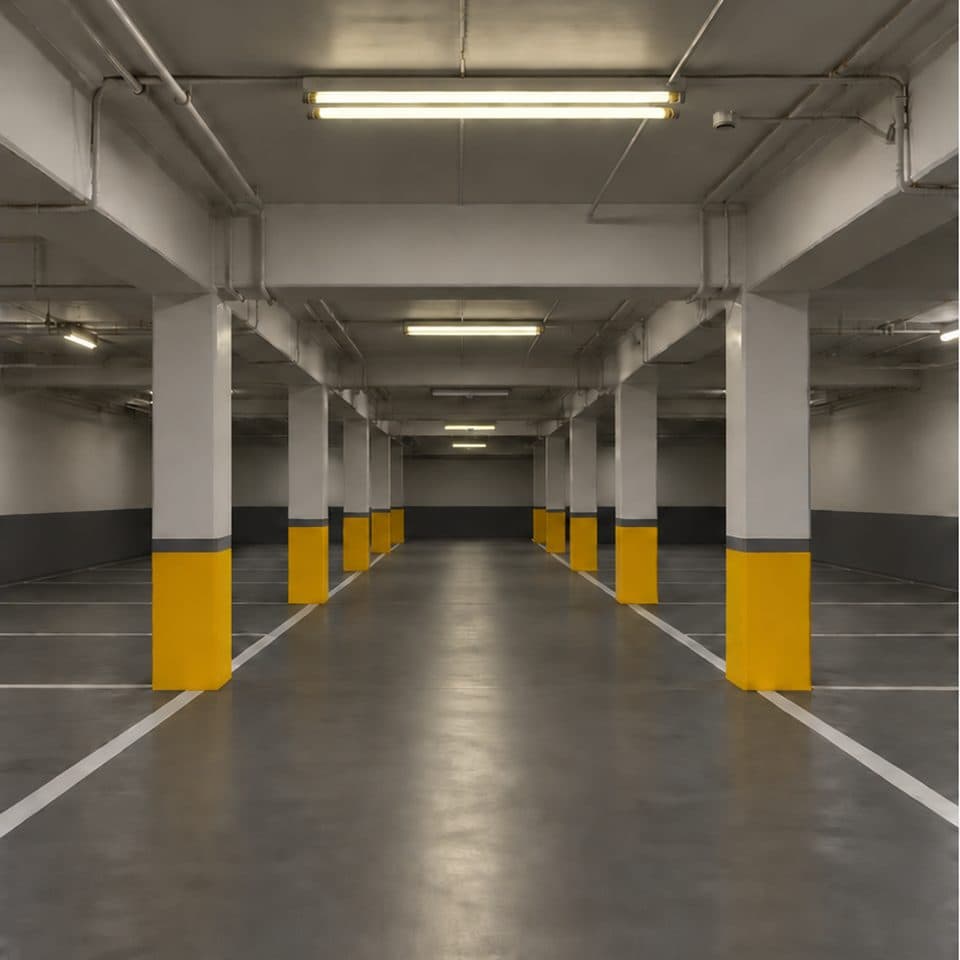
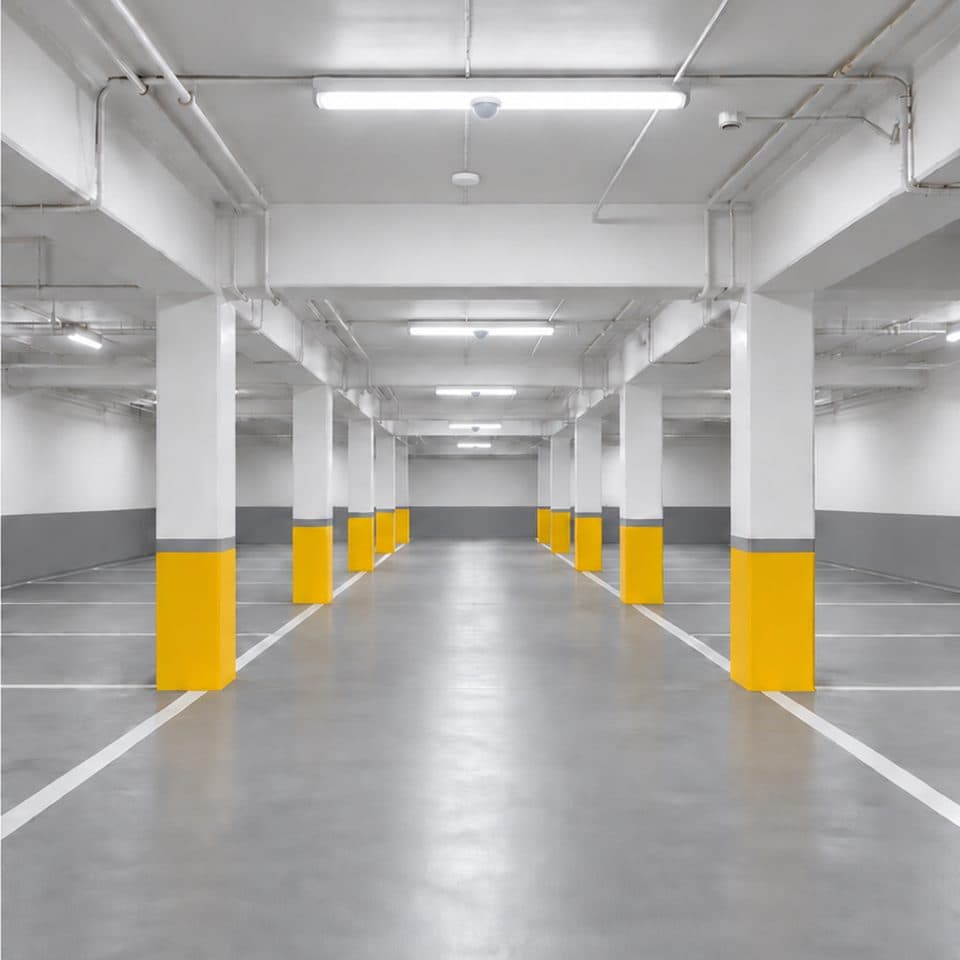
Lit around the clock, occupied in bursts
Sealed LED luminaires with integrated occupancy sensors hold a low standby level between cars and come to full output on approach. Striping reads from the ramp instead of from two bays away.
Drag the divider
What commissioning catches
Installed and inspected is not the same as working as designed.
The functional test schedule
| Setting | Specified | As found |
|---|---|---|
| Corridor dim level | 20% | 100% — never enabled |
| Occupancy timeout | 10 min | 30 min — factory default |
| Daylight setpoint | 30 fc | Disabled |
| Schedule | Astronomic on/off | Always on |
| High-end trim | Capped at design level | Uncapped — 100% |
| Sensor coverage | Full zone | Dead spot past mid-aisle |
| Garage sensor aim | Drive aisle | Blocked by a column |
| Zone mapping | Grouped by space | Fixtures mixed across zones |
See it in a building: Stairwells that never go dark · Dusk to dawn, on its own · Six suites, one daylit work floor · Six aisles, one picker · Corridors and garage on one control network · Eleven exam rooms, used part of the day
Controls another team specified, installed, or walked away from: we verify, re-tune, or redesign them. LEDs that went in years ago with controls that never quite worked are a normal starting point.
NLC is the delivery end of the path our lighting surveys start, and the commissioned system becomes part of the building's record in portfolio intelligence.
How is this different from a standard LED retrofit?
Do networked controls qualify for rebates in New York?
Do you commission controls another team designed?
Is this for new construction or existing buildings?
What controls platforms do you work with?
Specify It Right. Commission It for Real.
Tell us what's installed and what's not working — we'll come back with a feasibility path and a scoped proposal. No obligation; we respond within one business day.
$10M+ incentives processed · 2.5M+ fixtures documented
Prefer to talk? (929) 577-2490
Prefer to start smaller? See our survey tiers →Penalty figures and compliance details reflect DOB's published rules and can change. This page is general information, not legal or financial advice; confirm specifics with DOB, your utility, and your own professionals.
Last updated: June 2026. NYC building compliance rules, deadlines, and DOB procedures may change.